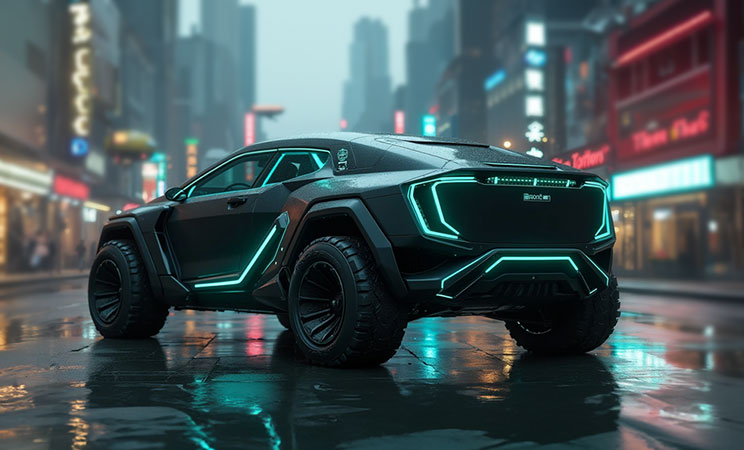
As artificial intelligence continues to evolve, the question of authenticity has taken center stage. With AI systems generating synthetic content, we face challenges around creativity, originality, and the implications of machine-generated works. We need to consider the nature of creativity, the reliability of AI outputs, and the importance of human input. Here are three main points I have been pondering about:
The Pretraining Dilemma
True creativity—though debatable—often comes from doing things differently than before. For instance, if you ask an AI model to generate an image of a futuristic car, it will likely lean toward familiar designs because it’s been trained on existing concepts. But we should be asking: who really decides what a futuristic car should look like? Instead of just requesting an image or concept, we need to take charge as creators. A concept car could have wild shapes or serve purposes that pretrained models don’t even consider. By doing this, we break free from limitations and enhance our creativity by collaborating with the tools at our disposal.
The Issue with Synthetic Content
When it comes to generating synthetic content, there’s a significant problem: the models we use to create content can eventually run out of fresh material to learn from. This leads to a “photocopier effect,” where the AI keeps recycling what it has already generated, eventually loosing all points of original reference. It’s kind of like the dilemma faced in the Middle Ages, which was eventually resolved by the Gutenberg press and careful content vetting. Today, AI and generative algorithms offer a chance for reliable sources to vet content using digital certificates. However, whether universities can effectively manage the rise of AI-assisted writing is a topic for another time.
True Randomness vs. Actual Randomness
Can a trained AI model really produce randomness? This question has sparked plenty of debate in academic and scientific circles. Often, what looks random from these models is actually deterministic, meaning it follows a set pattern. If we consider outside sources as valid for generating randomness, it highlights that only organic inputs can provide true authenticity. Everything we create exists in a specific time and place, influenced by human actions at that moment. Even the machines we build reflect their creators’ context, raising the age-old question: Who created us?
In closing, I’m by no means an expert, but I do understand that AI is indeed in its early stages, much like personal computers in the late 1980s. We can only speculate whether future AI will truly generate novel originality, pushing creative boundaries beyond its training data, or if human-AI collaboration will remain the key to authentic innovation